
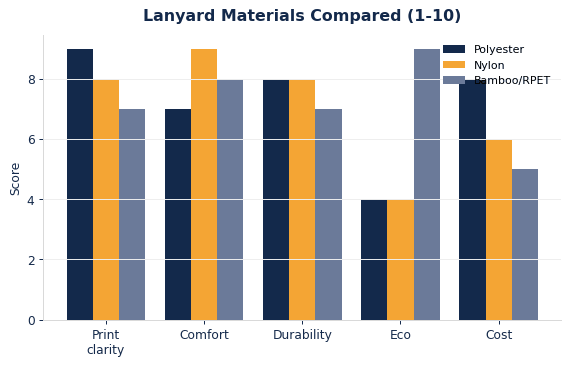
The material you choose sets the tone for the whole credential, which is why understanding lanyard materials is the first step in any order. Polyester prints the sharpest, nylon feels the softest, and bamboo or recycled RPET signals sustainability. This guide compares the common lanyard materials so you can match the feel, look, and budget to your event.
Each material has a clear sweet spot. Knowing the trade-offs prevents the two most common regrets: a lanyard that prints muddy, or one that feels cheap around the neck all day.
Polyester is the workhorse: crisp print, solid durability, low cost. Nylon has a glossy, soft hand-feel that upgrades the experience but prints slightly less crisply and costs more. Bamboo and recycled RPET trade a little print sharpness for a strong sustainability story.
For most events, polyester is the default; step up to nylon for premium or VIP credentials, and choose RPET when sustainability is part of the brand message.
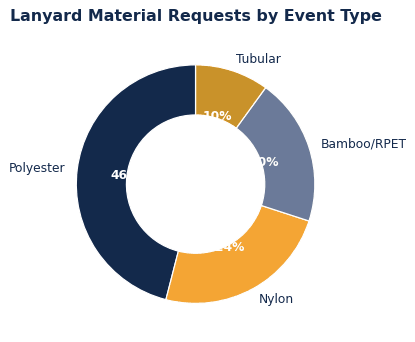
Conferences and expos lean polyester for volume and clarity; upscale galas favor nylon; green-focused or campus events increasingly request recycled options. The split below reflects typical requests.
Screen printing suits bold one- or two-color logos; dye-sublimation wraps full-color, edge-to-edge art and works best on polyester. Pair the material with the right attachment — bulldog clip, swivel hook, or breakaway — for the credential you are hanging.
| Material | Best for | Note |
|---|---|---|
| Polyester | Most events | Crisp, low cost |
| Nylon | Premium/VIP | Soft, glossy |
| RPET/Bamboo | Green events | Sustainable story |
Designing the badge that hangs from it? See our companion guide, our Custom Event Badges: Double-Sided Printing & Layout Guide. Explore our custom credentials & lanyards or get in touch to start an order.
Material and print method are a package deal, and choosing them together avoids a muddy or short-lived result. Polyester is the ideal surface for dye-sublimation, which wraps full-color, edge-to-edge art into the fibers so it never cracks or peels; it also takes crisp screen printing for bold one- or two-color logos. Nylon’s glossy surface prints slightly softer, so simple, high-contrast art performs best on it. Bamboo and recycled RPET take screen printing well and pair naturally with a minimal, eco-forward design aesthetic.
If your artwork is a detailed, multi-color logo or a repeating full-length pattern, specify polyester with dye-sublimation for the sharpest result. If it is a clean single-color mark, most materials will carry it well, freeing you to choose based on feel and sustainability instead. Confirming the print method against the material before you order prevents the common disappointment of fine detail filling in on the wrong surface.
Beyond material, a lanyard’s width and hardware shape the credential experience. Common widths run from a slim three-eighths inch up to a bold one inch; wider lanyards give more print real estate for sponsor logos and read better across a room, while narrower ones feel lighter for all-day wear. The attachment — bulldog clip, swivel J-hook, or split ring — should match the badge or card it carries, and a breakaway safety release is worth specifying for school, hospital, and industrial settings where a snag could be a hazard.
These choices interact with material and event type. A conference handing out thousands of credentials often standardizes on a three-quarter-inch polyester lanyard with a swivel hook and breakaway for a balance of print space, comfort, and safety. A premium gala might choose a soft nylon in a narrower width for an understated feel. Deciding width and hardware alongside material gives you a credential that looks right and works for the whole event.
Lanyards are an economical credential, and a little planning keeps them that way. Per-unit cost drops sharply with volume, so ordering for the full attendee list plus a small overage is efficient, and it avoids a costly rush reorder if turnout exceeds expectations. Confirm production and shipping lead time against your event date, especially for dye-sublimated full-color runs, which take a little longer than a simple screen print.
If sustainability is part of your message, keep your claims specific and honest. ‘Recycled RPET lanyard made from post-consumer plastic’ is more credible and useful than a vague ‘eco’ label, and pairing a recycled lanyard with recyclable badges and packaging tells a consistent story. Accurate, concrete language builds more trust with a green-minded audience than buzzwords.
The right lanyard material often follows directly from the kind of event you are running. High-volume conferences and expos lean on polyester because it delivers crisp, full-color print at a low per-unit cost and holds up through long days of wear, which matters when you are issuing thousands of credentials. Upscale galas and awards nights favor nylon for its soft, glossy hand-feel that reads more premium in photos and around the neck. Campus events, sustainability summits, and green-minded brands increasingly request bamboo or recycled RPET so the credential reflects their values from the first handshake.
Thinking in terms of event type also helps you decide where to spend. If the lanyard is a throwaway day pass, an economical polyester keeps costs down; if it is a keepsake from a flagship event or a VIP credential, a nicer material and a considered attachment justify the small premium. Letting the occasion guide the material means the credential feels appropriate to the moment rather than either cheap or needlessly expensive.
Polyester prints the crispest, especially with dye-sublimation for full-color, edge-to-edge art. It is the default for detailed or multi-color logos, while simpler marks reproduce well on most materials.
Recycled RPET and bamboo lanyards often cost about the same as standard polyester, trading a little print sharpness for a strong sustainability story. For a green-focused or campus event, they are usually worth it and easy to justify.
Nylon has the softest, glossiest hand-feel, which many attendees prefer for long days, though it prints slightly less crisply and costs more. Polyester is a close, more economical second and holds print and shape better through heavy wear.
A breakaway safety release is strongly recommended for schools, hospitals, and industrial settings where a snagged lanyard could be a hazard. For most conferences it is an inexpensive, sensible default that does not affect the look, and because it adds so little cost, many organizers simply spec it on every lanyard rather than deciding case by case.
Order a few weeks ahead with a small overage, and add extra lead time for dye-sublimated full-color runs, which take longer than a simple screen print. Building in that buffer avoids rush fees and protects you if turnout runs higher than your registration count.
We’ll match material, print, and attachment to your credentials and budget.