
The clip at the bottom of a lanyard is the part nobody notices until it fails, and by then a badge is on the floor or a strap is caught on a door handle. Choosing the right lanyard attachments is a small decision with outsized consequences for how secure, safe, and professional your credentials feel. A badge that flips backward all day, a hook that pops open in a crowd, or a clip that cannot survive a week of use will quietly undermine an otherwise polished event.
This guide explains the common lanyard attachments, what each is good at, and how to match the hardware to the way people actually wear their credentials, from everyday office badges to backstage crew passes.
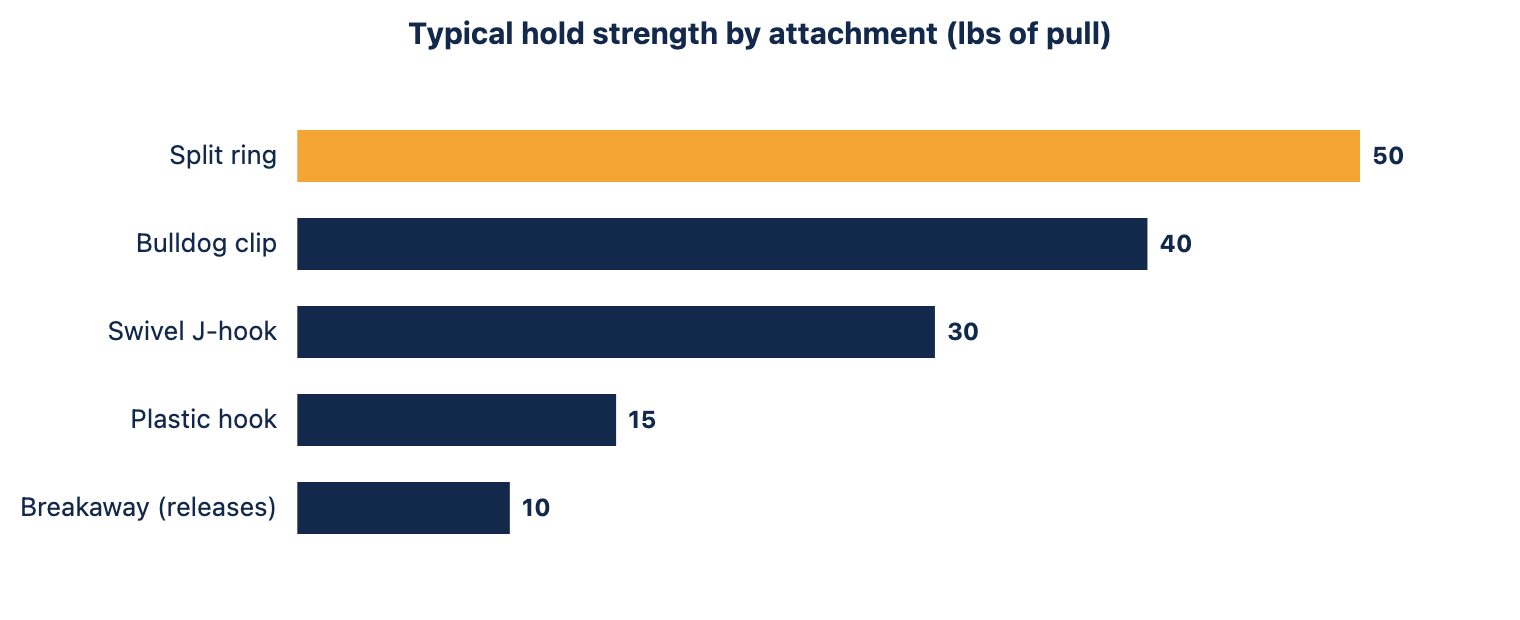
Five attachments cover almost every credential program. The bulldog clip, a spring-loaded alligator jaw, grips a badge slot firmly and is the workhorse of office and event use. The swivel J-hook rotates so the badge always faces forward, solving the annoying backward-flip problem. The split ring, a small metal loop like a keyring, is nearly impossible to detach accidentally, making it the choice when a badge must not fall. Simple plastic hooks are the cheapest option for low-stakes, short-run events. And the breakaway is not a badge attachment at all but a safety feature built into the strap itself.
A breakaway is a plastic connector, usually at the back of the neck, that snaps apart under a sharp pull. If a lanyard gets caught in machinery, a closing door, or someone’s grasp, the strap releases instead of choking the wearer. For schools, warehouses, hospitals, and any environment with moving equipment, a breakaway is a genuine safety requirement, not an upgrade. You can and should pair a breakaway strap with a strong badge attachment like a bulldog clip, so the badge stays put while the neck stays safe.
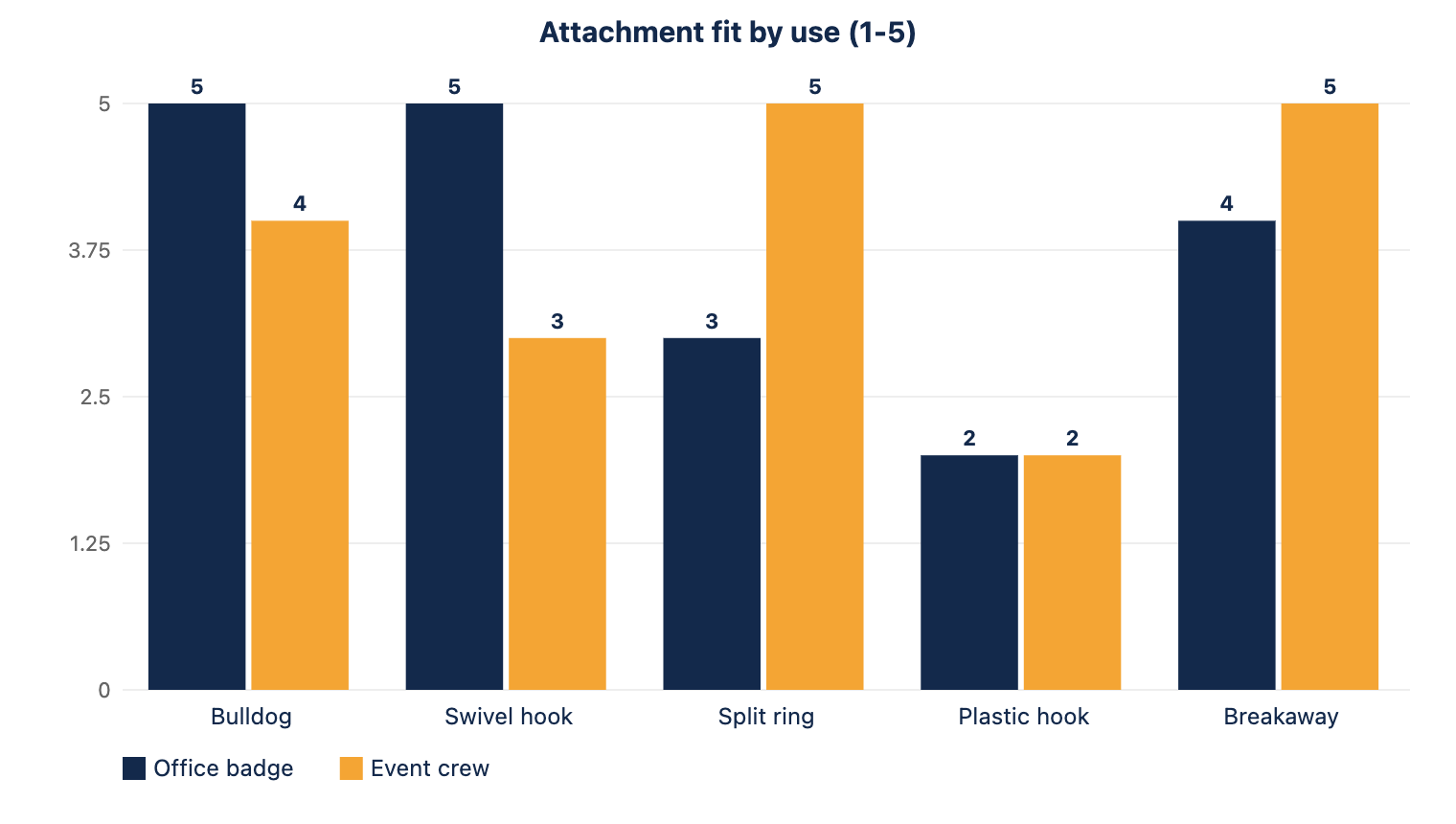
The right choice depends less on the attachment’s raw strength than on the wearing pattern. Office staff who swipe in and out all day benefit from a swivel hook that keeps the badge readable and reachable. Event crew hauling gear want a split ring or bulldog that will not shake loose. Conference attendees who wear a badge for a day are fine with an inexpensive plastic hook. Anyone near equipment needs a breakaway regardless of which badge clip sits below it.
| Attachment | Best for | Watch-out |
|---|---|---|
| Bulldog clip | Daily office, event staff | Badge can flip backward |
| Swivel J-hook | Frequent badge swiping | Hook can pop in tight crowds |
| Split ring | Must-not-fall passes | Slower to attach and remove |
| Breakaway strap | Any equipment or safety risk | Not a badge clip on its own |
| Plastic hook | Short, low-stakes events | Lowest durability |
Hardware gets the attention, but the strap it hangs from shapes comfort and perception just as much. Width matters: a 3/4-inch strap suits everyday badges, while a full-inch strap distributes weight better for heavy credential holders stuffed with tickets and cards. Material matters too, smooth polyester takes vivid printing for branding and tiering, while soft tubular or bamboo straps feel premium for VIP guests. Because the strap is where your logo and tier color live, treating it as an afterthought wastes the most visible surface in the whole system.
People wear event credentials for eight, ten, sometimes fourteen hours. A scratchy edge or a heavy double-ended setup that swings with every step turns into a real irritant by the afternoon. Rolled or heat-sealed edges, a comfortable width, and hardware that sits flat against the chest all add up to a credential people forget they are wearing, which is exactly the goal.
When you place an order, confirm three things beyond the clip: the attachment reinforcement, the strap width and material, and whether any safety breakaway is required for your environment. On sustainability, recycled PET straps and reusable metal hardware meaningfully cut the waste from single-use plastic hooks, and collecting lanyards at the exit for reuse next time is now common practice at conferences trying to trim their footprint. A collection bin at the doors recovers a surprising share of hardware that would otherwise be thrown out.
For multi-day or recurring events, spend a little more on metal hardware. Cheap plastic hooks crack, and a cracked hook mid-event means a lost badge and a trip to the credential desk. Metal bulldog clips and swivel hooks survive repeated use and can be reissued across events, which lowers cost over a season even though the per-unit price is higher up front. If you brand your lanyards, durable hardware also protects that branding investment.
A few finishing choices save real trouble. Reinforced attachment points where the clip meets the strap are the first thing to fail on bargain lanyards. Double-ended lanyards, with an attachment at both ends, hold a badge flatter and are popular for trade shows. And matching hardware finish to your color coding, matte black for crew, bright metal for VIP, adds another quiet layer to your tier system.
Order a small sample run before committing to thousands of units. Clip a sample to a loaded badge holder, wear it for a full day, and give it a firm tug to feel where it fails. The difference between a clip that reassures and one that pops open is obvious in your hand and invisible on a spec sheet, so a few dollars spent on samples prevents a warehouse of the wrong hardware.
The best lanyard attachments are the ones matched to how the badge is actually worn: swivel hooks for daily swipers, split rings for must-not-fall passes, bulldog clips as the reliable default, and a breakaway strap wherever safety demands it. Spend up for metal on anything reused, reinforce the attachment point, and let hardware finish reinforce your tiers.
Tell us your uses and quantities and we will match strap, hardware, and safety features to each credential tier.
Get a QuoteHome · About · Buying guides · Companion guide: event credential tiers
Enter below for a chance to win plus receive 10% off your first order.
Check your email for your 10% off code. Good luck!