Conference lanyards are one of those details nobody notices when they are right and everybody notices when they are wrong. Order well and every attendee wears your sponsor’s logo at chest height for three days; order late and you are paying rush fees for plain black straps that say nothing. This guide is the working checklist we share with event planners: how many conference lanyards to order, which styles and imprint methods fit which budgets, what the realistic production timeline looks like, and the handful of mistakes that cause registration-desk chaos.
The first ordering mistake is buying exactly as many lanyards as registrations. Plan for attendance plus overage: speakers, staff, exhibitors, press, day-of registrations, and replacements for the surprising number of attendees who lose theirs by day two. The working formula most planners use is registered attendance × 1.15, plus a separate small run for staff and VIPs in a distinct color so security can read roles at a glance. Color-coding by role — attendee, speaker, exhibitor, staff, press — costs almost nothing at order time and saves badge-checking time all week.
Custom lanyards come in five common constructions, and the right one is mostly a budget-and-brand decision:
Silkscreen prints one or two spot colors and is the budget pick for simple logos. Dye sublimation prints edge-to-edge full color on both sides and has become the event standard — gradients, multiple sponsor logos, and photographic art all reproduce cleanly. Woven jacquard trades color range for permanence. If your event has a title sponsor plus supporting sponsors, dye sublimation is almost always the answer: it fits multiple marks without crowding.
Specify three things beyond the strap. First, the attachment: swivel J-hooks are standard for slotted badge holders; bulldog clips grip paper badges; double-ended straps stabilize large badges and stop them flipping backward — worth the small upcharge for any badge bigger than 4×6. Second, breakaway safety clasps, which release under sudden load; many venues and all healthcare-adjacent events require them. Third, badge compatibility: confirm your badge holders have a slot or grommet matched to the hook you chose. Mismatched hook-and-holder combinations are the single most common day-before-event emergency, and the fix is a box of adapter clips ordered too late.
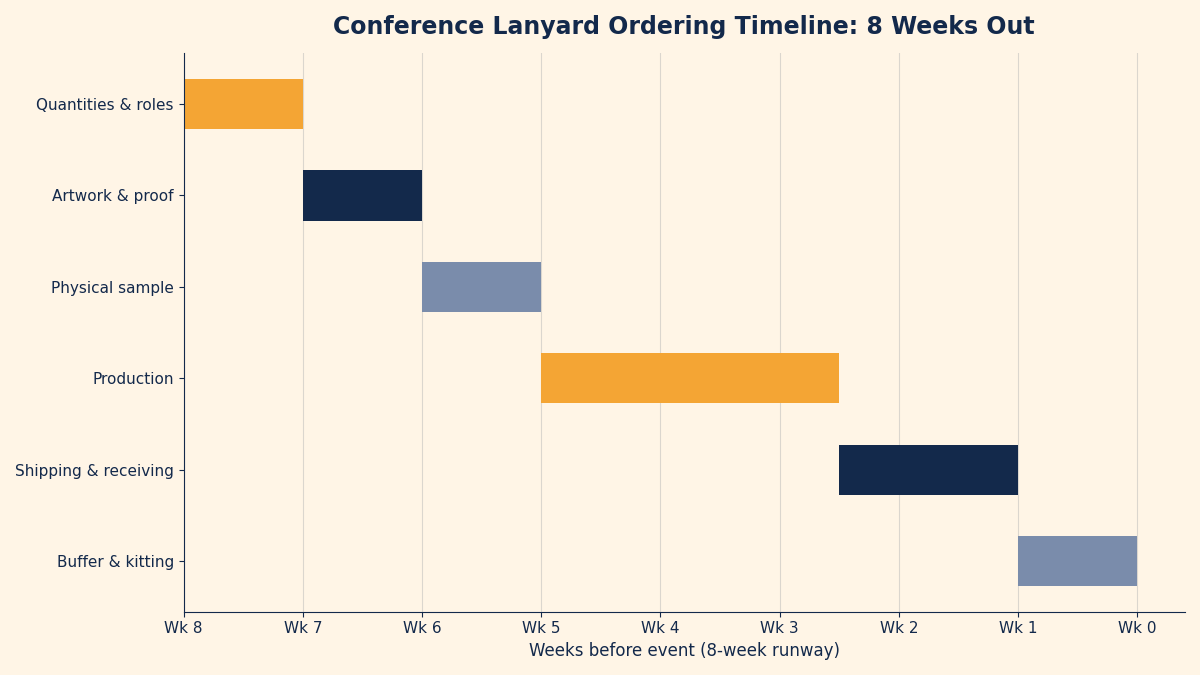
Lanyard production is not slow, but it is unforgiving of late starts because shipping sits at the end of the chain. Working backward from event day:
| Weeks before event | Milestone | Notes |
|---|---|---|
| 8 | Finalize quantities & roles | Attendance × 1.15 plus color-coded staff/VIP runs |
| 7 | Approve artwork & proof | Sponsor logos in vector format; check both strap sides |
| 6 | Pre-production sample | Test with your actual badge and holder |
| 5–3 | Production | Dye sublimation typically runs 10–15 business days |
| 2 | Shipping & receiving | Deliver to venue or office; count cartons against packing list |
| 1 | Buffer & kitting | Pre-clip badges by role; stage by registration lane |
Three physical specs round out the order. Width: 3/8-inch straps read as minimal and suit text-only branding; 3/4-inch is the event standard because sponsor logos need the canvas; 1-inch straps carry multiple marks comfortably but feel heavy after a full day, so reserve them for lanyards that also carry drink tickets or schedule cards. Length: 36 inches is standard and lands a badge mid-chest on most adults; if your badge doubles as a schedule that attendees lift to read, 38–40 inches saves a hundred small tugs a day. Color: pick strap colors that contrast with attendee clothing — a navy strap on business-casual navy blazers disappears, which is why high-visibility golds, teals, and whites dominate well-designed events. Always check printed logo colors against the strap color on the proof; a dark logo on a dark strap is the most common artwork approval miss.
Event badge lanyards are one of the most visible sustainability statements a conference makes, because every attendee handles one. rPET straps made from recycled bottles now print as cleanly as virgin polyester, bamboo and organic cotton options suit natural-texture brands, and suppliers will certify recycled content for your event’s reporting. Just as important is the end-of-life plan: exit collection bins recover 30–50 percent of straps at a typical conference, and recovered straps work perfectly for internal meetings, training cohorts, and volunteer programs the rest of the year. If you print the event year on the badge insert rather than the strap itself, the same lanyards can serve your event for multiple years — the cheapest sustainability win in the entire event budget.
The best event badge lanyards still fail at a badly planned desk. Three habits from high-throughput events: pre-clip badges to lanyards before doors open rather than making attendees assemble them; stage spares of every role color at each lane; and keep a small “blank” reserve — unprinted straps in the event color — for reprints and walk-ups, which avoids handing a sponsor-free black strap to a paying attendee. After the event, collection bins at the exits recover a surprising share of straps for reuse at internal events, which sustainability reports love.
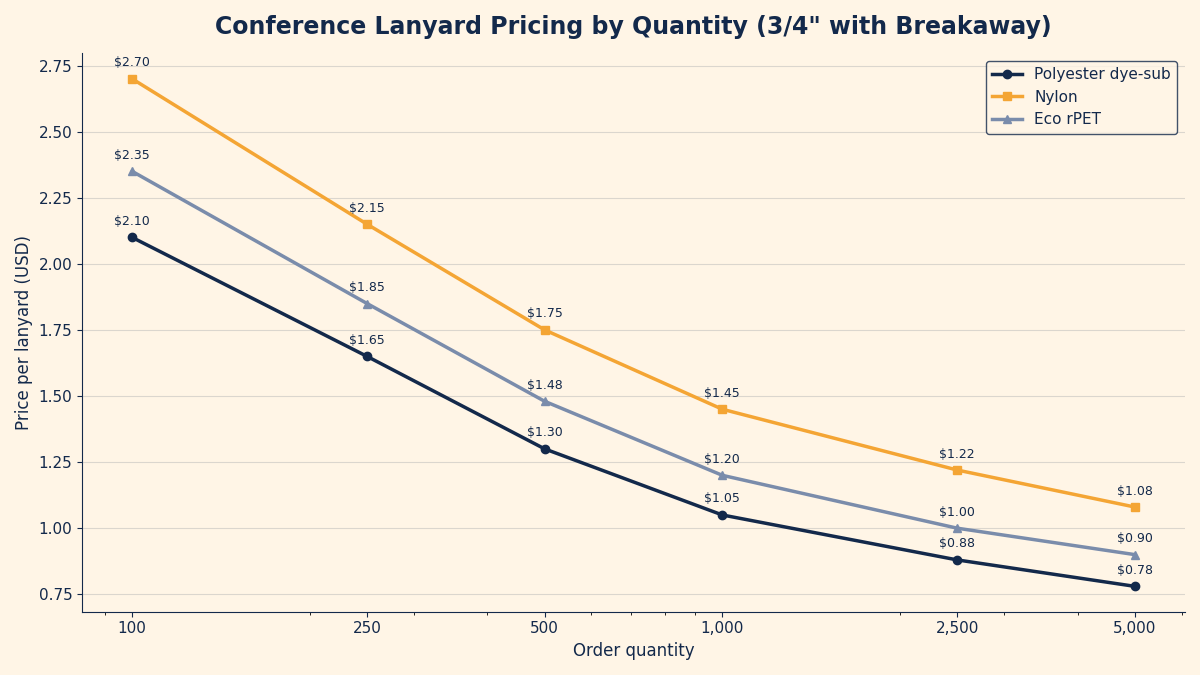
For a 1,000-person conference, expect roughly $950–$1,400 for full-color dye-sublimated conference lanyards with breakaways at standard lead times — about a dollar per attendee for three days of sponsor visibility at eye level. Rush production and air freight can add 40–60 percent, which is the concrete cost of starting at week three instead of week eight. Pair the strap order with your holders early: our guide to badge holder types breaks down rigid, vinyl, and eco options and how they mate with each hook style.
Learn more about our event credential work, browse other planning guides on the blog, or explore the full lineup from our homepage.
Send us your logo, headcount, and event date — we’ll turn around a proof, a physical sample, and volume pricing on a timeline that protects your event week.
Get a QuoteEnter below for a chance to win plus receive 10% off your first order.
Check your email for your 10% off code. Good luck!